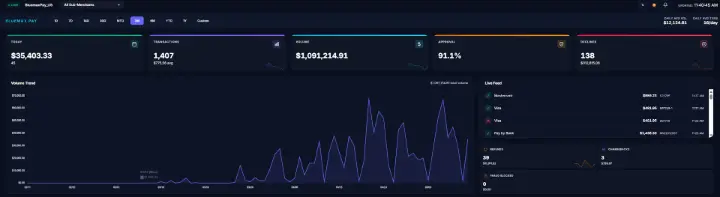
The BluemaxPay Dashboard. Volume, transactions, approval rates, declines, and a live feed in one view.
Most Odoo merchants can’t see their own payment data without logging into three different systems.
That’s not an exaggeration. If you’re running Stripe for online payments, a separate terminal for in-person sales, and Odoo for everything else, your transaction data lives in three places that don’t talk to each other. Stripe has a dashboard. Your payment terminal provider has a portal. Odoo has the sales orders and invoices. But none of them show you the full picture, and the only thing connecting them is a spreadsheet someone on your team maintains manually.
We kept hearing the same version of this problem from merchants we support. Month-end close takes longer than it should. Questions about approval rates or decline patterns require digging through two portals. Visibility into hourly patterns that would help with staffing or marketing decisions just isn’t there. So we built something to fix it. The BluemaxPay Dashboard.
The BluemaxPay Dashboard pulls real-time transaction data from Adyen, the processing platform behind BluemaxPay, and from Odoo. All of it displayed in one place. Users can see payment volume, transactions, approval rates, declines, refunds, chargebacks, daily averages and more, updating as transactions happen.
No manual refresh, no export, no spreadsheet in between.
What was really unique, however, was connecting the payment data with Odoo. Customers can see their Odoo invoice and sales order numbers displayed inline with payment amounts.

Top Orders. Each transaction is tied directly to its Odoo invoice or sales order reference.
Bluemax Pay, powered by Adyen, is the only payment solution built natively for Odoo merchants. That connection between payments and Odoo transactions doesn’t exist with Stripe. It doesn’t exist with anyone else. This distinction matters.
Once the data started flowing, we noticed things we weren’t specifically looking for.
The Transaction Time Heatmap was built as a simple monitoring tool, a way to see when transactions were happening across the day and week. But merchants started using it for something else entirely. Staffing decisions. One retailer noticed their Wednesday late mornings consistently ran hot, while Sundays were nearly dead. That’s the difference between a five-person shift and a two-person shift, visible immediately, without a separate BI tool or a consultant building custom reports.
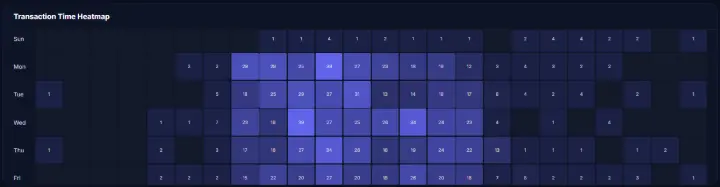
The Transaction Time Heatmap. Hot zones become obvious. So do the dead ones.
The decline data was another one. Most merchants we talk with have a rough sense of their approval rates, but they’ve never actually watched it over time. Seeing a 90% approval rate feels fine until you realize the other 10% represents real revenue that did not come through. For our average customer, that 10% represents hundreds of thousands in declined transactions across 30 days. Some of those are legitimate declines, like expired cards or insufficient funds. But some of these declines are recoverable. You can’t recover what you can’t see.
The Volume Trend view turned out to be more useful for pattern recognition than we expected. Dips and spikes that looked random on a daily report started making sense when plotted over weeks. A merchant noticed their volume dropped every other Friday and traced it to an invoicing schedule that was pushing payments to the following Monday. A small operational change, sending invoices a day earlier, smoothed out their cash flow without changing anything about the product or the customers.
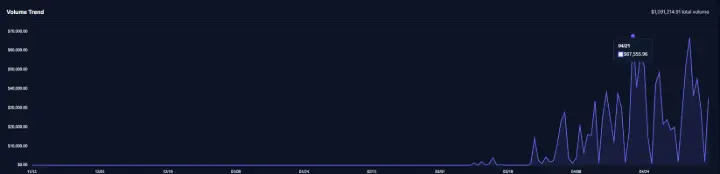
Volume Trend over time. Patterns that look random day to day become obvious week over week.
We’re working on the next iteration now, connecting fraud and chargeback monitoring directly into the dashboard. The logic is straightforward. Once you can see patterns in real time, the natural next step is automated rules that act on them. That’s still in development, so I’ll save the details for a future post.
If you’re running Odoo with any payment provider, we’re genuinely curious. What does your visibility into transaction data look like today? Are you still bouncing between Stripe, your terminal portal, and Odoo to get the full picture?
Would love to hear what’s working and what isn’t.